Google reviews for opticians: when to ask and how to reply
The best moments to ask patients for a review, how to make it one tap, and how to reply without revealing anything about their eyes.
Google reviews for opticians come from asking every patient at two natural moments, when they collect their glasses and when their eye test is done, and from replying without ever mentioning their prescription or eye health. For an independent practice, they are also the most direct way to stand out from the high-street chains when someone searches "opticians near me" on Google Maps. Here is when to ask, how to make it easy, what to reply and what never to write.
Why Google reviews for opticians matter so much to independents
Someone choosing an optician on Google Maps compares a handful of profiles in seconds: average rating, number of reviews, photos and what recent patients say. The chains have brand recognition and advertising. An independent practice in Harrogate or a family-run optician in Cardiff has something else to show: time spent on each eye test, honest advice on frames and lenses, and careful aftercare.
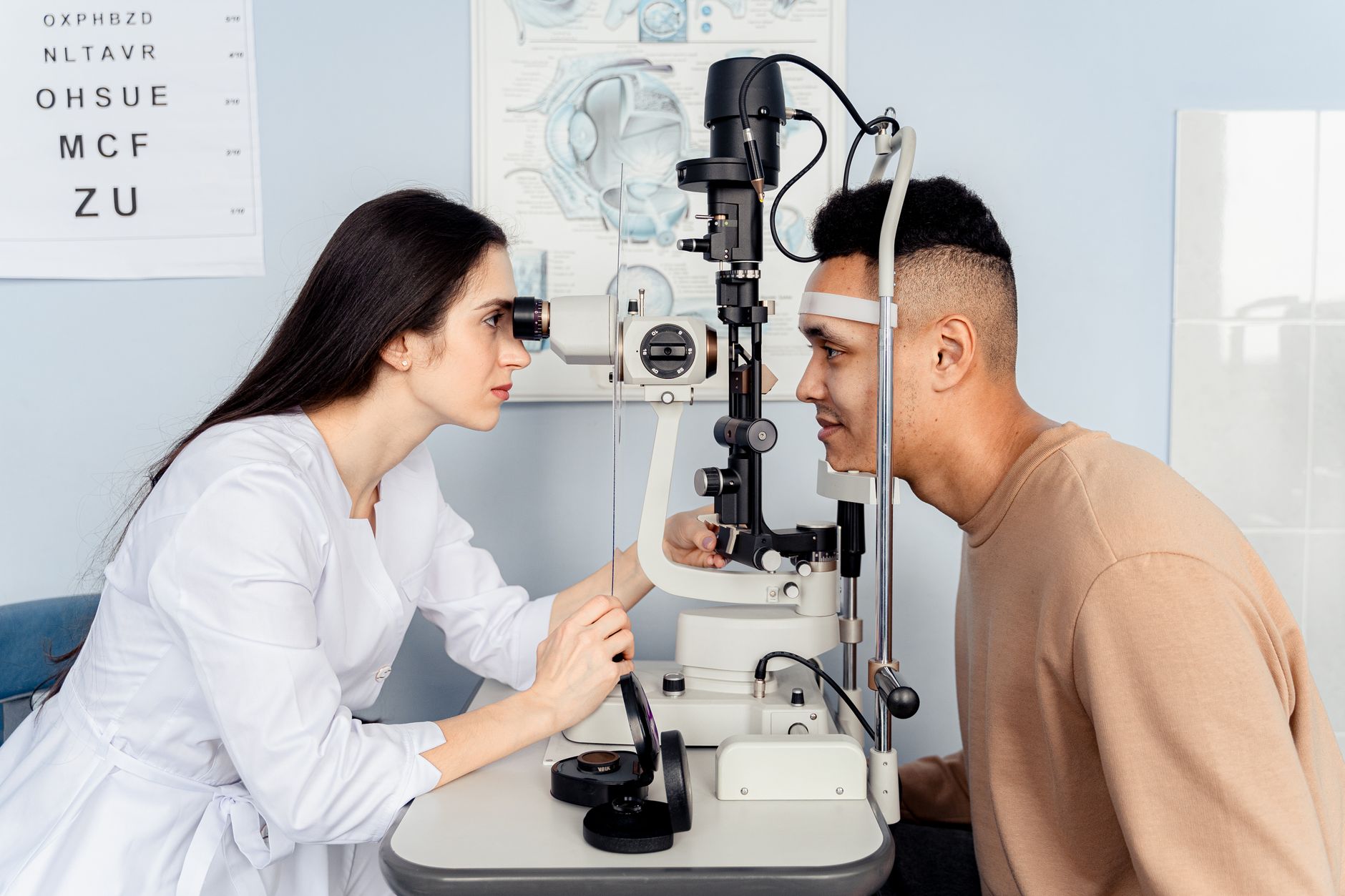
Photo by Antoni Shkraba on Pexels
It helps to remember that each branch of a chain has its own Google Business Profile and its own reviews. On the map you are not up against a national brand; you are up against the branch down the road. If your patients write that you explained varifocals properly or adjusted their frames for free, that counts.
Typical themes in optician reviews:
- The eye test: patience, clear explanations, not feeling rushed.
- Frame advice: whether someone helped or left them alone in front of the display.
- Turnaround: when glasses were promised and when they actually arrived.
- Adapting: especially to varifocals or a big change in prescription.
- Price and guarantees: quotes, offers and what happens if something goes wrong.
When to ask for a review
The most common mistake is asking when the patient pays for the order, before they even have their glasses. There are better moments:
| Moment | Example | What you can say |
|---|---|---|
| Collecting glasses | A patient in Norwich tries on her new pair, you adjust the arms and she can see clearly across the shop | "If you'd like to tell people how we looked after you, a Google review really helps. You can do it from the stand right here." |
| After the eye test | A patient in Leicester who came in with headaches and had the results explained calmly | "Thanks for coming in. If you fancy leaving us a review on Google, it only takes a minute." |
| After a quick repair | A new nose pad or a bent arm straightened on the spot | "All done. If that helped, a review helps other locals find us." |
| A week later, for varifocals | A first-time varifocal wearer at a practice in Exeter | A text or email after a week: "How are you getting on with your new glasses? If anything feels off, pop in. And if you'd like, here's the link to leave us a review." |
The varifocal follow-up makes sense because many people need a few days to get used to them. Asking on day one can catch them while it still feels strange. Checking in a week later lets you sort out any discomfort before it turns into a complaint, and ask when they are seeing well.
Three rules worth sticking to:
- Ask everyone, not just the smiley ones. Google Maps content policies ban selectively soliciting positive reviews and discouraging negative ones.
- Nothing in return. No money off contact lens solution, no free case. Google Business Profile Help says offering free or discounted products or services in exchange for reviews is strictly prohibited.
- Don't ask patients to name a staff member. "Mention that Sarah helped you" sounds harmless, but Google's policies also prohibit asking for specific content, including content that identifies a staff member, or setting staff a target number of reviews. If a patient names Sarah on their own, lovely.
How to make leaving a review take one tap
Asking only works if the patient doesn't then have to hunt for your profile. Google lets you ask for reviews with a link or a QR code that takes people to your profile. Your options:

Photo by Anna Shvets on Pexels
- Just asking. Free, but many patients won't get round to searching for you and finding the right button.
- Printed QR code. A card on the counter or inside the glasses case. Cheap and effective; the patient has to open the camera and scan.
- NFC stand. The patient taps their phone on the stand and the review page opens. It suits the dispensing desk, where people sit for a few minutes while you fit their frames. Note that the HolaRevi NFC stand has no printed QR code, so pair it with a separate QR if you want to cover phones without NFC.
- Link by text or email. Ideal for the varifocal follow-up or the "your glasses are ready" message.
For placement ideas, see our guide on where to put a Google review stand. Most of what works in the rest of the shop (window, bag, receipt) is covered in Google reviews for retail shops.
How to reply without revealing patient information
In this respect a practice is closer to a clinic than a shop. The General Optical Council's Standards of Practice for optometrists and dispensing opticians (standard 14.3) require registrants to maintain confidentiality when communicating publicly, including when writing online and on social media. A patient mentioning their prescription in a review does not mean you should discuss it in public.
When replying:
- Never mention prescriptions, conditions, test results or specific lenses.
- Don't confirm the person is a patient if the review doesn't make it clear.
- Move any detail to a private channel: phone, email or in the practice.
- If a complaint could have legal or regulatory implications, get professional advice before you reply.
Three examples to adapt:
Positive review after an eye test: "Thank you so much for your review, Margaret. We're really glad you felt looked after and that everything was explained without rushing. See you next time."
Complaint about turnaround: "Hi David, we're sorry your glasses took longer than we told you, and you're right that we should have let you know sooner. Please give us a ring or pop in and we'll put it right."
Complaint about adapting (no details): "Thanks for letting us know, Helen. We're sorry you're not comfortable with your new glasses yet. We'd like to go through them with you properly, so do call us and we'll find a time that suits."
None of these says "your varifocals" or "the results of your test". Reply steadily, and make sure negative reviews never sit unanswered for weeks.
Independent vs chain: what your replies can show
Future patients read your replies too. Without criticising anyone, you can let your strengths come through: thank staff by name when the patient mentioned them, mention that you never rush an eye test, and point out aftercare such as adjustments and cleaning. Avoid comparing prices with the chains or arguing about a quote; a calm reply explaining what was included persuades more.

Photo by https://kaboompics.com/ on Pexels
Checklist for your practice
- Ask every patient at collection, after the eye test and after a repair.
- For varifocals, check in after a week: first ask how they're adapting, then share the link.
- Keep your review link handy and a stand at the dispensing desk.
- Never offer anything in return or ask patients to name a staff member.
- Reply to every review with no health details, and take complaints private.
- Each month, look at which themes repeat and fix what is in your hands.
How HolaRevi helps
If you want leaving a review to take one tap, see how the counter stand works on HolaRevi's NFC stands page. And if replying is what eats your time, HolaRevi answers your Google reviews with AI, in your tone and in each patient's language, and you can approve every reply before it is published so no health details slip through.
Frequently asked questions
When should an optician ask for a Google review?
The best moments are when the patient collects their glasses, once they can see clearly and you've adjusted the frames, and at the end of an eye test where you've explained everything calmly. For varifocals, a message a week later often works better: ask how they're adapting first, then share the link. Always ask every patient, not only the ones who seem happy.
Can an optician offer a discount for a Google review?
No. Google prohibits offering discounts, free products or services in exchange for reviews and treats it as fake engagement. You also can't ask only happy patients, or ask people to mention a particular staff member. What you can do is ask everyone with a simple sentence and make it easy to reach your profile with a link, a QR code or an NFC stand.
What should an optician never say when replying to a review?
Anything about the patient's eye health: no prescriptions, conditions or test results, even if the patient mentioned them in their review. Don't confirm they are a patient if the review doesn't make it clear. Thank them, apologise where it's due and move details to phone, email or the practice. If a complaint could have legal or regulatory implications, take professional advice before replying.