Review management software for medical practices: a UK guide to replying safely
Reply to every patient review without ever disclosing health data.
Review management software for medical practices should do what any review tool does (collect your reviews in one place and help you reply quickly), with two extra conditions: nothing goes live until someone at the practice has read it, and no reply ever confirms that the reviewer is a patient or says anything about their health. If you run a physiotherapy clinic, a private GP practice or a psychology service in the UK, this guide covers what to ask of any tool, how to reply without disclosing health data, and how the options compare. Dental practices have their own guide to Google reviews for dental practices.
Why a clinic can't reply like a café
A café in Leeds can answer "So glad you loved the flat white!" and it's perfect. A physio clinic in Bristol that answers "Great to hear your knee rehab is going well" has just told the internet that this person is a patient, and what for.

Photo by Cedric Fauntleroy on Pexels
Under UK GDPR, data concerning health is special category data. The ICO's guidance on special category data explains that appointment details can count as health data when they reveal something about a person's health, and gives the example of an invoice for physiotherapy sessions. A public reply that mentions treatment does exactly that.
Professional regulators say the same. The HCPC, which registers physiotherapists and practitioner psychologists, reminds registrants that any identifiable information about a service user is confidential, including details about their health. And Google's own Business Profile help tells businesses never to share private information about reviewers.
It does happen. In Spain, the data protection authority fined an eye clinic €7,000 after its reply to a Google review published the patient's full name, ID number, phone number and health details (AEPD decision PS/00122/2023). The rules differ by country, but the lesson travels: a review reply is processing personal data, and the practice is responsible for it.
What to look for in review management software for medical practices
Use this checklist with any provider, including us.
| What to require | Why it matters for a clinic | What to ask |
|---|---|---|
| Approval before publishing | Every healthcare reply needs a human read-through | Can I switch off auto-posting completely, or just for negative reviews? |
| Your own tone instructions | You need fixed rules: never confirm someone is a patient, never mention treatment | Can I write instructions the AI always follows? |
| Negative review alerts | A complaint about care needs a quick, considered reply | Will I be notified when a 1 or 2-star review comes in? |
| Team permissions | The person drafting and the person approving can be different | Are there separate roles for staff? |
| Multi-site dashboard | Each clinic has its own Google Business Profile | How many locations and users does each plan include? |
| A data processing agreement | The tool will handle reviews containing personal data | Will you sign a DPA, and where is the data stored? |
| No review gating | Asking only happy patients breaks Google's rules | Does the tool send only satisfied patients to Google? If yes, walk away |
On that last point, Google's prohibited content policy bans discouraging negative reviews, selectively asking for positive ones, and offering discounts or free services in exchange for reviews. A free physio session for a review is an incentive Google prohibits.
Physio, GP and psychology: what changes
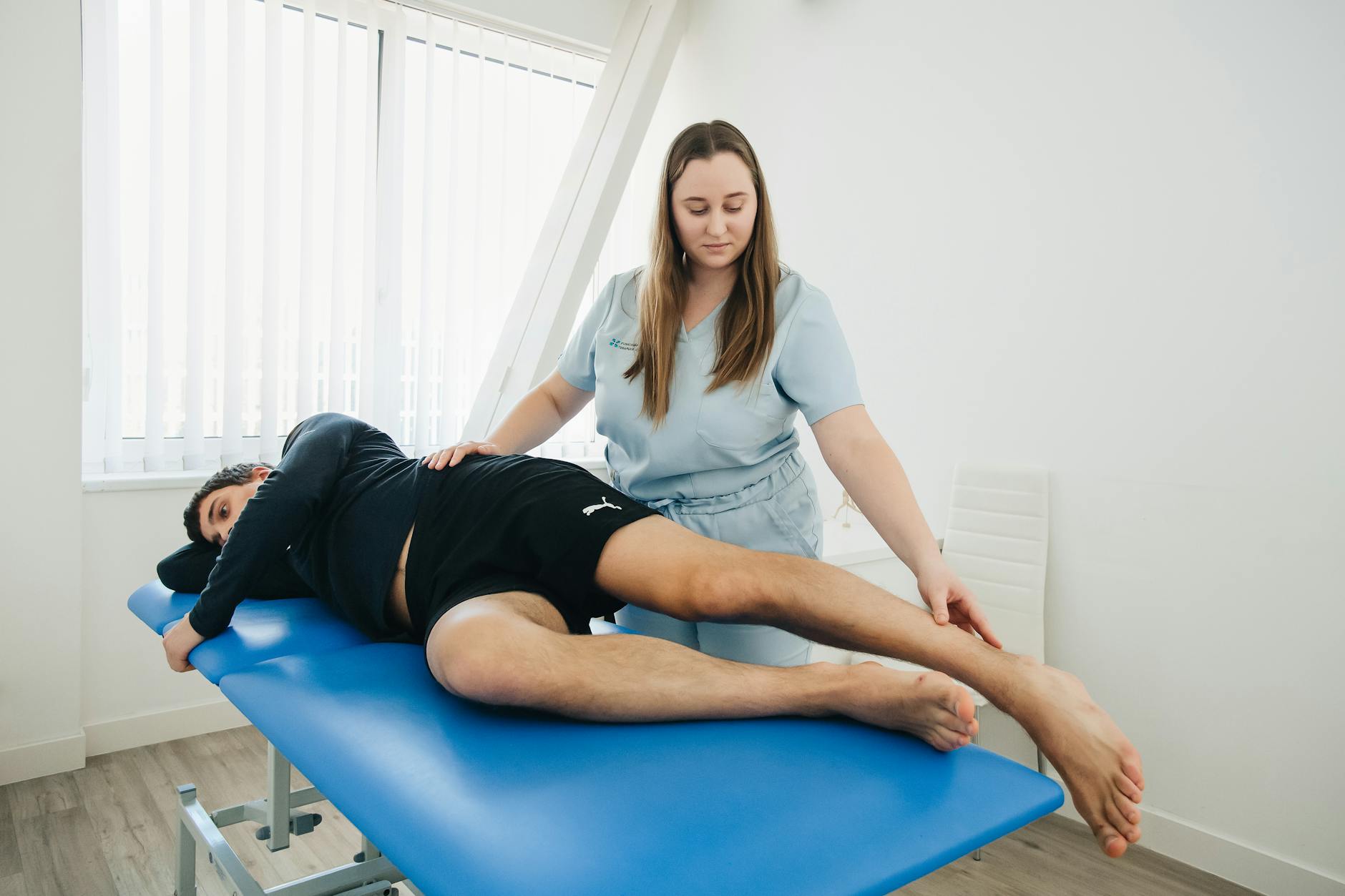
Photo by Funkcinės Terapijos Centras on Pexels
Physiotherapy clinics
Reviews usually praise a named physio, punctuality and recovery. Thank them and pass it on, but leave the injury out, even if the patient mentioned it.
Review: "Months of back pain sorted in four sessions. Thanks, Tom."
Reply: "Thank you so much, Sarah! We'll pass this on to Tom, he'll be delighted. Best wishes from the whole team."
No "back", no "sessions", no "treatment".
Private GP practices
Complaints tend to be about waiting times, fees or disagreement with a diagnosis. Don't defend yourself by explaining the case. Keep it general and take it offline:
"Hi James, we're sorry you left feeling that way. We can't discuss individual cases here, but we'd like to hear from you. Please call the practice and ask for the practice manager."
Psychology and counselling services
The most sensitive of all. Simply attending therapy is private, and a warm "thank you for trusting us with your journey" confirms it. Keep replies short and neutral, and approve every one by hand, five-star reviews included.
If a review raises legal questions, such as a threat of a complaint or details about other people, speak to your indemnity provider or professional body before replying.
Your options, compared honestly
| Option | Pros | Cons |
|---|---|---|
| Replying by hand in Google | Free, full control | Reviews pile up; each site does its own thing |
| A receptionist handles it | Knows the patients and the tone | Takes time away from patients |
| A reputation agency | Hands-off | A monthly service, and someone outside writes for your practice |
| Generic review software | One dashboard and alerts | Often no healthcare rules or mandatory approval |
| AI software with manual approval | AI drafts, you approve or edit | Needs careful set-up of instructions |
Prices mostly scale with locations, users and extras such as reports. Ask about minimum terms and how long you can trial it first. For a wider comparison, see our guide to Google review response software.
Where HolaRevi fits
HolaRevi brings your Google reviews into one dashboard; from the Pro plan it adds Facebook and TripAdvisor, plus manual import for other sites. The AI drafts each reply in the reviewer's language, and you choose how it's published:

Photo by Negative Space on Pexels
- Manual approval: replies wait until someone approves, edits or dismisses them. This is the mode we'd suggest for a clinic.
- Rule-based auto-posting: by star rating and whether the review has text. Negative reviews (1 and 2 stars) are never auto-posted unless you turn that on.
- Custom tone instructions the AI follows with priority, such as "never confirm the person is a patient, never mention treatment or diagnosis, and invite negative reviewers to call the practice".
- Negative review alerts and a weekly summary email.
- Multiple sites and staff: Pro covers up to 5 locations and 5 users, with roles (Admin, Member and Viewer) and review assignment; Business removes the limit on locations and users.
An honest caveat: the AI is designed to pick up specific details from each review, which is exactly what healthcare replies must avoid. That's why tone instructions and manual approval aren't optional for a clinic.
Where to start this week
- Write down your three rules: don't confirm patients, don't name treatments, take complaints offline.
- Decide who drafts and who approves.
- Check your existing replies and fix any that reveal clinical details.
- Reply to negative and recent reviews first.
- Ask every patient the same way at the end of the visit, with nothing offered in return.
- If you trial software, start with auto-posting switched off.
HolaRevi's free plan lets you connect your Google profile and publish up to 5 replies a month, no card required. Have a look at the HolaRevi plans, set your rules, and keep the final say.
Frequently asked questions
Can a doctor or clinic respond to Google reviews?
Yes, but keep replies general. Don't confirm the reviewer is a patient and don't mention treatment, tests or diagnosis, even if they did. Thank positive reviewers warmly and invite anyone unhappy to contact the practice directly. Google's own help pages say never to share private information about reviewers, and in healthcare that information is usually health data, which UK GDPR treats as special category data.
Is replying to a patient review a GDPR breach?
Replying isn't a breach in itself. Disclosing personal or health information in the reply can be. In Spain, an eye clinic was fined €7,000 after its reply published a patient's name, ID number, phone number and health details. If an existing reply reveals clinical details, edit it straight away, and speak to your indemnity provider or professional body if you're unsure.
Can AI write replies to patient reviews?
It can save a lot of time, provided it's set up for healthcare. Give it fixed instructions (never confirm patients, never mention treatment, take complaints offline) and keep auto-posting switched off so a member of staff approves every reply. Ask the provider for a data processing agreement and where the data is stored before you sign up.